
How Office Retrofits Are Reenergizing Workplaces
By Jeff Haack
Read full article from officeinsight here.
In today’s hybrid world, companies are giving the office a new purpose. No longer just a place to work, it’s becoming a space to gather, inspire, and connect. As more employees return in-person, businesses are rethinking how their environments can better support that shift. For many, retrofitting existing spaces is proving to be a smart, sustainable strategy for preparing the workplace for long-term success.
From a practical standpoint, retrofits offer compelling advantages. Financially, they can cost 30–50% less than new construction and be completed faster due to reduced permitting and demolition requirements. Environmentally, they help minimize waste and embodied carbon by reusing core structures. Operationally, they can be phased, allowing for continued occupancy and minimal disruption. But beyond these clear logistical benefits, what makes retrofits truly valuable is their ability to transform work environments into spaces that help retain talent, support culture, and encourage meaningful engagement.
The Workplace Must Earn Its Relevance
In a world of flexible schedules and remote options, the workplace must now earn its place in employees’ daily lives. People want more than just a desk—they’re looking for environments that support their wellbeing and foster a larger sense of purpose. Retrofitting existing spaces gives organizations a powerful opportunity to deliver on those expectations. With thoughtful design, the workplace becomes a strategic tool for retaining talent and keeping teams engaged.
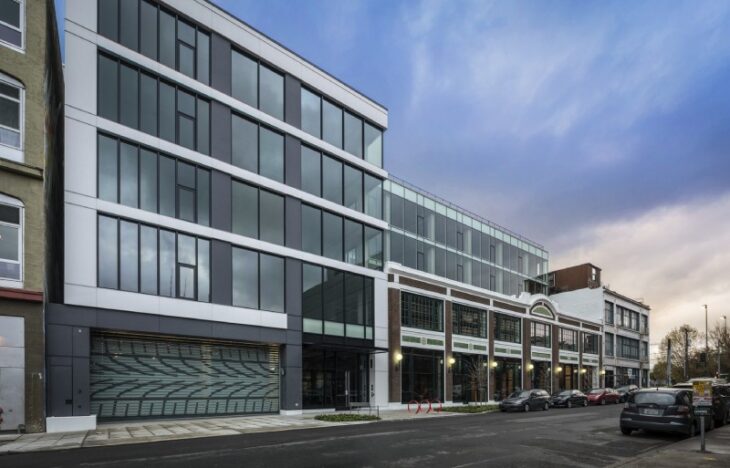
An example is Tower 180, a 360,000-square-foot high-rise corporate office in downtown San Diego. Originally built in 1963, the existing tower was hampered by its dated façade, tired common areas, and lack of robust amenity spaces. To reinvigorate the mid-century building, the tower underwent a full exterior and interior retrofit that respected the original vertical rhythm while dramatically improving its appeal and performance. The exterior transformation includes an upgraded glazing system and added sleek aluminum fins with integrated LED lighting. Inside, the renovation introduced museum-quality lighting, reimagined lobbies, and updated tenant areas. The result is a transformation that not only modernized the building but also helped position it as a desirable, reenergized workplace destination.
Comfort, Connection, and the Rise of the Resi-mercial Office
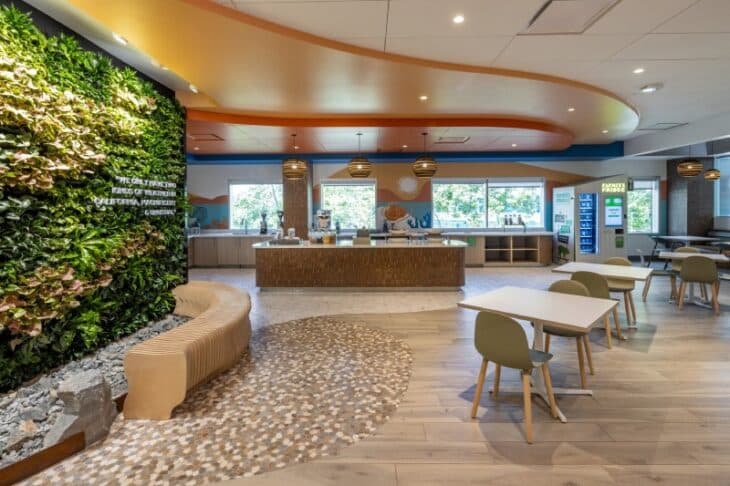
Another strategy for meeting evolving employee expectations is drawing inspiration from residential and hospitality design. This “resi-mercial” approach incorporates warm, inviting materials, layered lighting, quiet retreats, and communal zones that encourage spontaneous interaction. Soft textures, flexible lounges, curated coffee stations, and calming wellness rooms are elements that reinforce a sense of comfort and belonging.
When well-executed, these design elements do more than look good, they foster emotional connection and a deeper sense of identity. Employees are more likely to use these spaces, which translates into increased morale, collaboration, and productivity.
This philosophy came to life at 211 San Diego, a 28,866-square-foot tilt-up R&D facility that was transformed into a dynamic nonprofit headquarters. Using a selective demolition approach, this retrofit worked within the existing shell to create open-plan collaborative areas, breakout rooms, and private suites designed for both staff and community use. The new design emphasizes flexibility, brand identity, and user well-being to deliver a space that supports purpose-driven work while making people feel cared for and inspired.
A Holistic Approach to Retrofits
Every retrofit should begin by listening to the organization and its people. Before any design work starts, it’s essential to understand the company’s mission, values, and the employees who bring them to life. This human-centered process, grounded in empathy and multidisciplinary collaboration, empowers designers to craft environments that authentically reflect a company’s identity and priorities.
Successful retrofits weave together architecture, interiors, landscape, and experiential graphics to create a cohesive brand experience. When employees see themselves and their values reflected in the space, it fosters trust, pride, and long-term engagement.
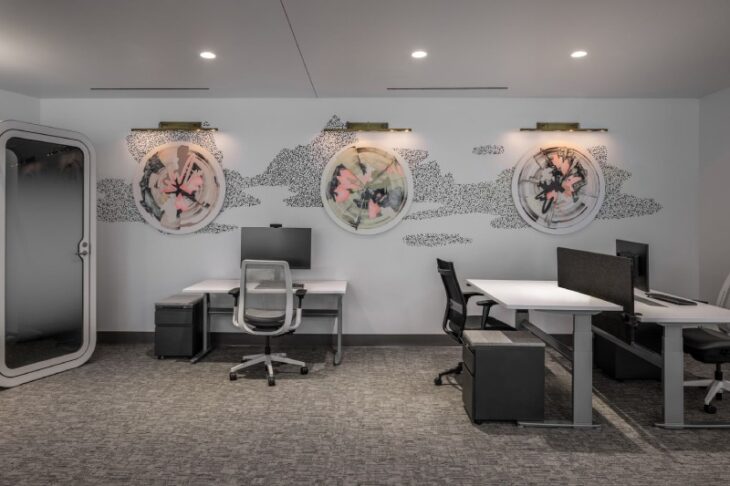
A few key strategies to unlock the potential of existing workplaces include: Daylight and flexibility — Introducing skylights, reconfiguring partitions, or removing dropped ceilings to maximize natural light and openness; Visual elements — Integrating art and branded graphics into social hubs, wellness rooms, and breakout areas to encourage connection; Modern systems integration — HVAC, electrical, and plumbing upgrades using modular or above-ceiling strategies that minimize disruption; Envelope enhancements — Insulation and glazing improvements to enhance thermal comfort and reduce operational costs; Smart tech integration — IoT and building automation systems to support energy efficiency and occupant comfort.
Together, these solutions help companies respond to the needs of their people, supporting improvements in lighting quality, layout adaptability, and indoor air performance.
Why Retrofits Are the Future
The growing demand for workplace retrofits is not a passing trend — it reflects a fundamental shift in how organizations approach sustainability, real estate, and the employee experience. With over 80% of the current building stock expected to remain in use through 2050, there is a growing emphasis on adapting what already exists rather than building new.
Additionally, municipalities are encouraging adaptive reuse through policy incentives, while sustainability frameworks like LEED and WELL reward improvements to existing structures. Building owners are seeing clear benefits: energy savings of 20–60%, reduced construction waste, and quicker paths to occupancy. Just as importantly, employees are responding positively to these refreshed environments.
Beyond the tangible savings, organizations are seeing measurable gains in employee satisfaction, engagement, and cultural alignment. These are the intangibles that make a workspace not just functional, but meaningful.
Make it Matter
Ultimately, the goal of a retrofit isn’t just to modernize a space—it’s to create an environment that signals care, authenticity, and long-term investment in people. When you walk into a workplace that feels considered and intentional, it sends a clear message: You matter.
Retrofits that prioritize comfort, flexibility, and culture are not short-term design fixes, they’re strategic investments in the future of work. By making the most of what already exists, organizations can create offices that are not only sustainable and efficient but also deeply human.