

Downtown Tower Earns Kudos for Design
By Ray Huard – July 17, 2025
Read original article in San Diego Business Journal here.

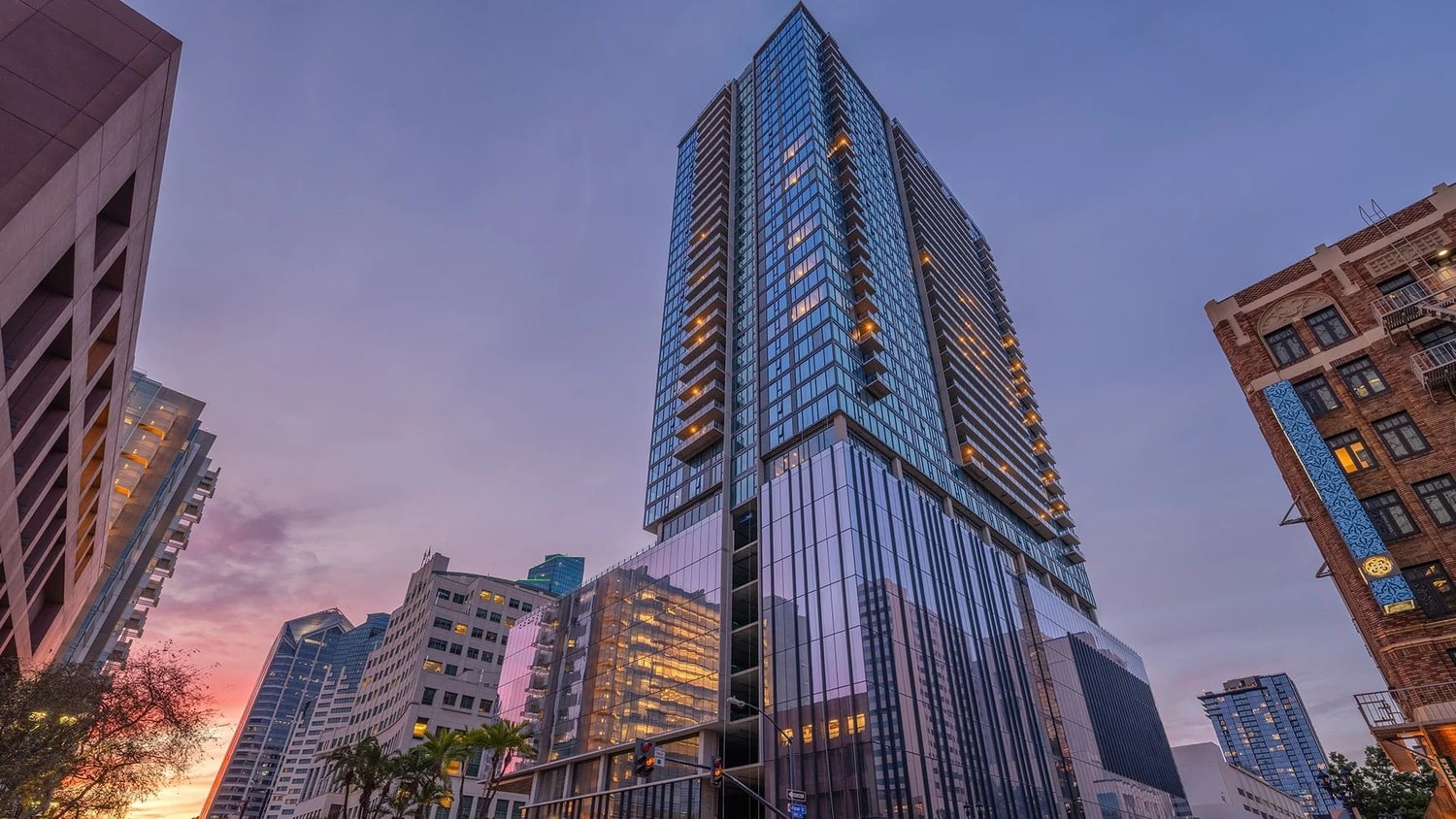
SAN DIEGO – A 37-story downtown San Diego tower that combines apartments on top of office space has won an award for its unusual architecture.
Designed by Carrier Johnson + Culture and built by Holland Partner Group and North America Sekisu House, West, at 220 W. Broadway, was singled out for a 2025 Gold Nugget architectural award as one of the most outstanding projects in California.
“Winning a Gold Nugget Award is a meaningful recognition of West’s design quality, innovation and impact on the urban fabric of San Diego,” said Jeff Haack, principal and managing director of interiors and brand at Carrier Johnson + Culture.

“As one of the most respected awards in the architecture and development industry, it affirms that West is not only aesthetically compelling, but also a solution-driven project that addresses local challenges, such as public transit integration, downtown revitalization and civic connectivity,” Haack said. “In a field of nearly 700 entries, West’s selection signals its excellence among peers and validates the project’s ambition to redefine mixed-use development in a civic context.”
West stands out “because it redefines what a mixed-use urban project can be,” Haack said.
“While there are several types of mixed-use buildings in San Diego, West may be one of the first high-rise towers in the city to combine residential and office space in the same structure,” said Duane Hagewood, a principal at Carrier Johnson + Culture.
Built on what had been a three-block courthouse and jail site, West transformed the area into a walkable destination renamed Courthouse Commons with easy access to the blue and green trolley lines.
SANDAG (San Diego Association of Governments), a regional planning agency, was among West’s first commercial tenants, leasing 87,000 square feet of office space as its headquarters.
Meeting Demands of a Changing Market
Haack said that the design of the West is meant to create “a layered and civic gateway.”
“West is a framework for how cities can evolve responsibly, equitably and vibrantly,” Haack said. “The stepped back massing and elevated office form a floating canopy, framing and outdoor communal promenade that serves the public realm, not just the residents and tenants.”
West has a wide, landscaped setback along Union Street.
The office space in West has 40,000-square-foot floor plates, floor-to-ceiling glass and outdoor balconies.
Although not part of the West building, the overall project included construction of a new $80 million underground pedestrian tunnel connecting the downtown San Diego County Jail to a new courthouse to the west of the site.
At 290,000 square feet, West has 431 apartments, including 87 earmarked for low-income tenants, 300,000 square feet of office space, and 17,000 square feet of ground-floor retail space.
The apartments range from 650 square feet to 1,500 square feet.
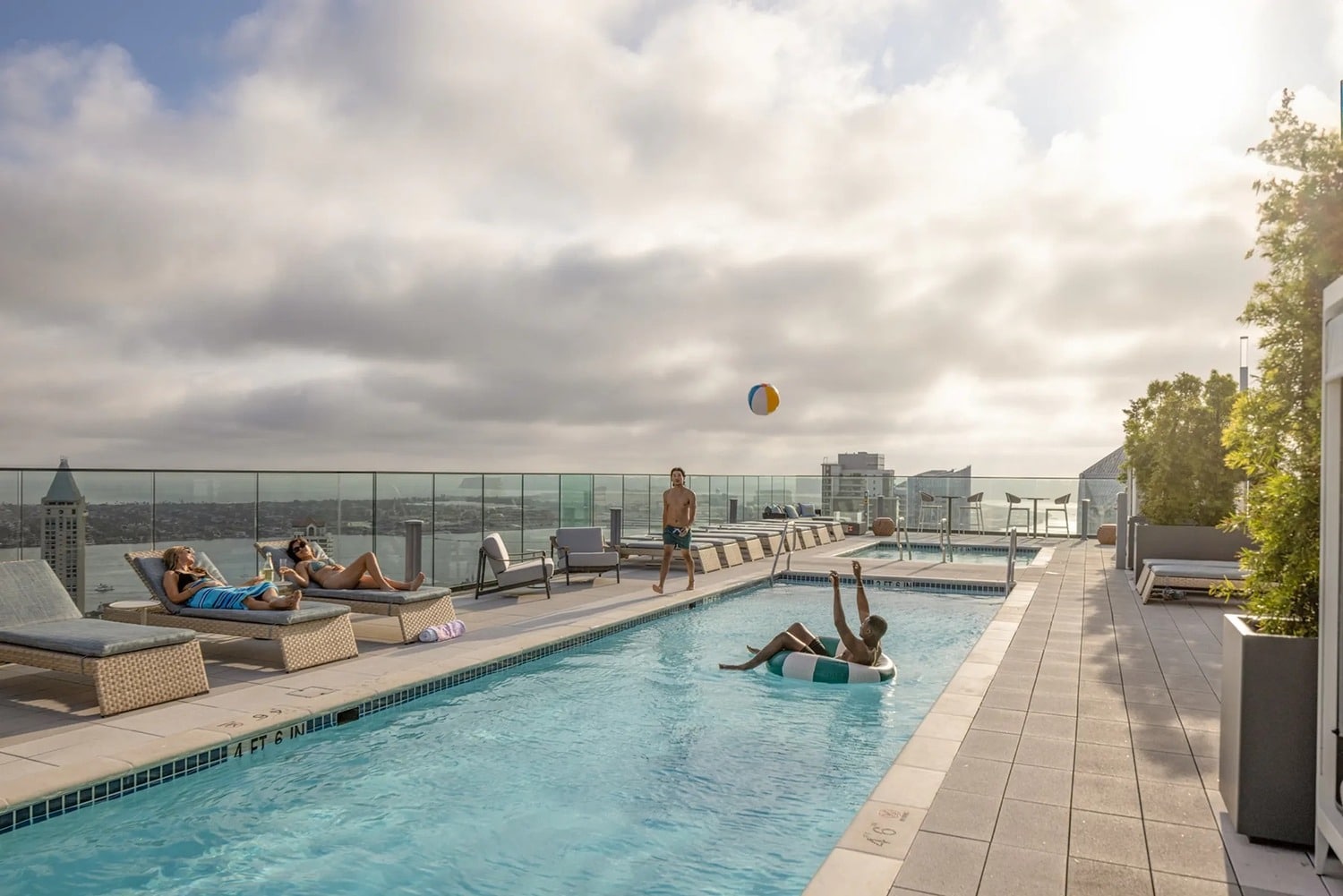
Office space spans floors two through eight with a ninth-floor deck of 15,000 square feet separating the offices from the apartments above them. There are also five levels of underground parking with 600 parking spaces.
Although West is a model that others might emulate, Hagewood said that sagging demand for office space makes it unlikely that a similar project would be built in the immediate future.
“Many of the zoning regulations that previously required office space in mixed-use developments like West have recently been relaxed or removed. As a result, most developers are currently focused on other product types, making office components at this scale less common in the near term,” Hagewood said. “However, as the market continues to evolve, we may see renewed interest in this type of product as demand shifts and new opportunities emerge.”